
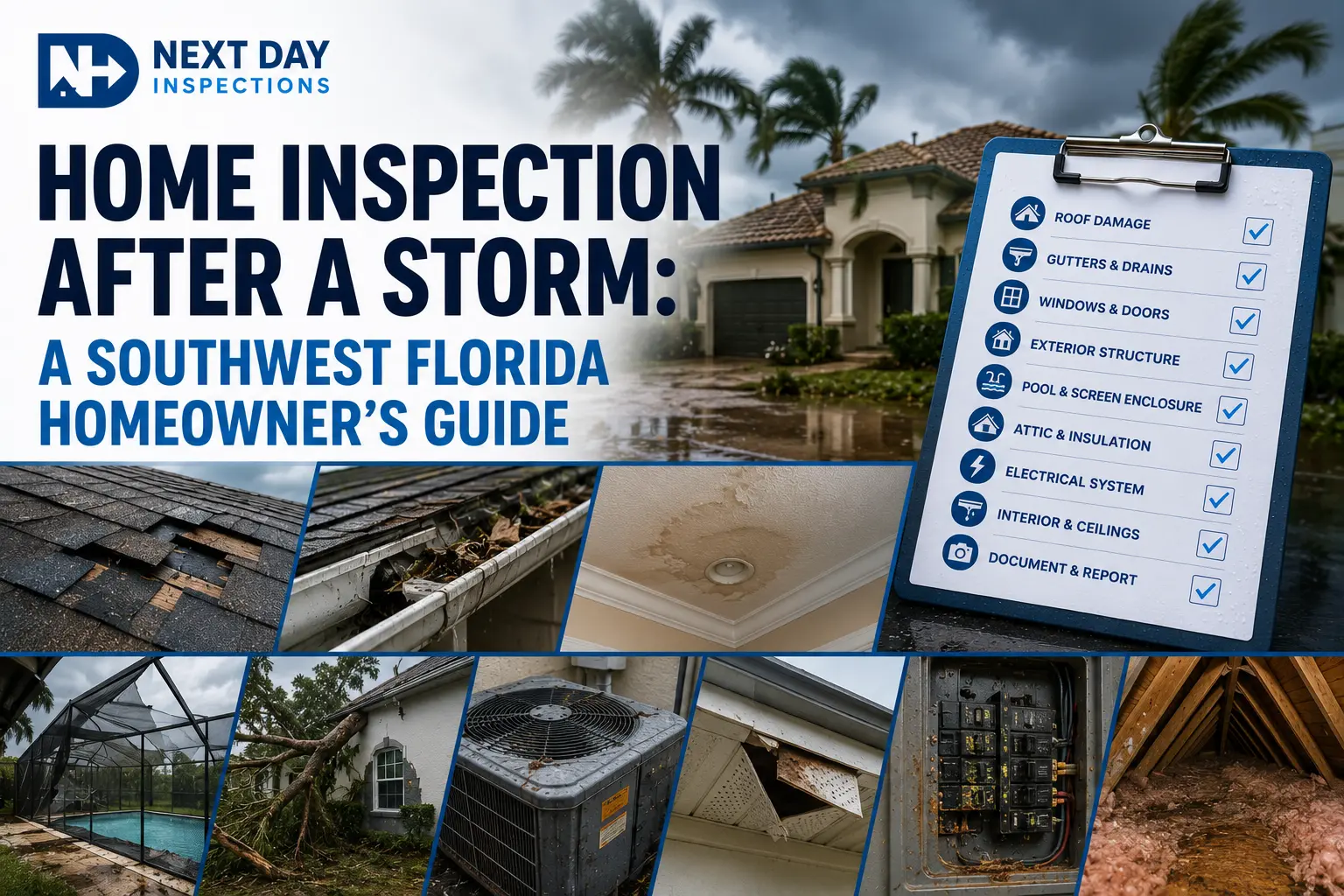
Strong storms are part of life in Southwest Florida. Whether you live in Naples, Fort Myers, Cape Coral, Bonita Springs, Marco Island, or Lehigh Acres, wind-driven rain can leave behind damage that is not always visible from the driveway. A professional home inspection after a storm can help identify hidden concerns, document the condition of your property, and give you clearer information before you contact a contractor or make an insurance decision.
After a storm, inspect your home safely from the ground and document anything unusual. If there is no emergency, an independent inspection can help you understand what was affected before you call a roofer or file an insurance claim. Do not climb onto a wet roof or sign an immediate repair contract with a door-to-door contractor.
Why a Professional Inspection Matters After a Storm
After a hurricane, tropical storm, or severe thunderstorm, most homeowners start by walking around the property. That is a useful first step, but many storm-related problems cannot be confirmed from the ground.
Strong winds can lift shingles without removing them completely. Flashing around vents and other roof penetrations can loosen. Wind-driven rain can enter beneath roofing materials while the visible surface still appears intact.
In some cases, the first sign of trouble appears days or weeks later as a ceiling stain, damp insulation, elevated indoor humidity, or a musty smell. By that point, connecting the damage to a specific storm may become more difficult.
Why Early Documentation Matters
- It creates a dated record of the property’s condition.
- It documents visible findings with photographs.
- It may help separate recent storm damage from older wear.
- It identifies areas that may require specialist evaluation.
- It gives you clearer information before making repair or insurance decisions.
Even when no significant damage is found, a professional assessment can provide useful peace of mind during hurricane season.

Should You Call Your Insurance Company or an Inspector First?
Why Use an Independent Home Inspector?
An independent home inspector evaluates and documents the condition of the property. The inspector does not profit from selling you a new roof, replacing windows, or completing storm repairs.
This separation helps reduce potential conflicts of interest. You receive information about what was observed rather than a repair estimate presented as an inspection result.
An inspection can help you understand whether the issue appears limited, whether additional specialist evaluation is needed, and whether the documented condition may justify contacting your insurance company.
Important: Every insurance policy is different. Review your policy and speak with your insurer or insurance professional about reporting deadlines, emergency mitigation, coverage, and claim requirements. A home inspection is not a substitute for an insurance adjustment, engineering evaluation, legal advice, or repair estimate.
What to Check Yourself Before Calling a Professional
You can complete a useful first check without climbing onto the roof. Wait until weather conditions are safe, then walk around the property and inspect it from ground level.
Roofing Materials
Look for missing or displaced shingles, broken tiles, roofing materials in the yard, and visible changes along the roof edges.
Gutters and Downspouts
Check for bent gutters, detached sections, loose downspouts, dents, overflowing water, or sections pulling away from the home.

Windows and Doors
Look for cracked glass, torn screens, damaged frames, broken seals, loose shutters, and doors or windows that no longer operate normally.
Fencing and Pool Areas
Inspect fencing, gates, pool enclosures, screens, decks, and outdoor equipment for movement, impact damage, or missing components.
Interior Moisture
Look for ceiling stains, bubbling paint, wet drywall, damp flooring, musty odors, and moisture near skylights or roof penetrations.

Trees and Debris
Check for branches resting on the roof, damaged trees near the structure, and debris that may have struck the home during the storm.
Do Not Climb Onto the Roof
Wet roofing materials, loose tiles, damaged decking, and concealed openings can make a post-storm roof unsafe. A roof that appears stable from the ground may have weakened areas that cannot safely support your weight.
Use ground-level photographs and leave rooftop evaluation to a qualified professional. Take clear, dated photos before moving debris or making temporary changes, provided it is safe to do so.
What a Post-Storm Professional Inspection Covers
The right inspection depends on the age of the property, the type of storm exposure, visible symptoms, and the documentation you need.

4-Point Inspection After Storm Damage
A 4-point inspection is focused on the roof, electrical, plumbing, and HVAC systems. It does not replace a complete storm-damage assessment, but it can provide useful updated documentation when one or more of these systems may have been affected.
Wind Mitigation After a Hurricane
A wind mitigation inspection is not designed to determine the cost of storm repairs. It documents the construction features that may help the home resist future wind damage and may be needed for insurance underwriting or discounts.
Schedule a Post-Storm Inspection
Need updated documentation after a Southwest Florida storm? Schedule a 4-point, wind mitigation, thermal imaging, or combination inspection and receive a detailed same-day report.
Book Your InspectionHow to Avoid Storm-Chaser Scams
After a major storm, Southwest Florida neighborhoods often see an increase in door-to-door roofing and restoration offers. Many contractors are legitimate, but homeowners should not assume that every person offering a free roof inspection is local, qualified, or acting in their best interest.
Pressure to Sign Immediately
A legitimate contractor should give you time to review the agreement, ask questions, and compare other estimates.
No Verifiable Florida License
Verify the contractor’s license, insurance, business address, and local references independently before signing anything.
Guaranteed Roof Replacement
No contractor can guarantee how an insurer will evaluate damage or whether an entire roof replacement will be approved.
Offers to Waive Your Deductible
Treat offers to waive, reimburse, or hide an insurance deductible as a serious warning sign rather than a discount.
Not Every Roof Mark Means You Need a New Roof
Do not sign a repair agreement simply because someone found a mark on a shingle or roof tile. Cosmetic surface wear does not automatically mean the roof has lost its ability to perform.
Ask for a written explanation of the finding, obtain more than one professional opinion, and understand whether the issue is cosmetic, functional, or structural before agreeing to replacement.
How Storm Damage Affects an Active Home Sale
A storm can create additional uncertainty when it occurs after the buyer’s inspection but before closing. The earlier inspection reflects the property’s condition on the date it was completed. It does not guarantee that the property remained unchanged afterward.
When significant weather occurs during the inspection-to-closing window, buyers, sellers, and real estate agents should communicate promptly and review the purchase agreement.
- Document the property after the storm. Take photographs of the exterior, interior, roof areas visible from the ground, and any new damage.
- Notify the real estate agents. Buyers, sellers, and closing professionals should know that the property may have changed since the original inspection.
- Review the purchase contract. Check the casualty, inspection, repair, and property-condition provisions with the appropriate adviser.
- Arrange a reinspection when appropriate. A targeted inspection can document whether the storm caused a material change.
- Document any agreement in writing. Repairs, credits, extensions, and insurance responsibilities should be clearly recorded.
The party responsible for repairs, insurance claims, or closing decisions depends on the purchase agreement and specific circumstances. Buyers and sellers should rely on their real estate agent, attorney, insurance professional, and other qualified advisers for transaction-specific guidance.
Documenting Storm Damage the Right Way
Good documentation should show more than one close-up image of a damaged area. It should make it easy to understand where the finding is located and what the surrounding area looks like.

At Next Day Inspections, reports are delivered the same day, helping homeowners, buyers, sellers, and agents review findings without waiting several days for documentation.
Frequently Asked Questions
Should I call my insurance company or a home inspector first after a storm?
If the home has major damage, active water intrusion, or an immediate safety issue, protect the property and contact your insurer according to your policy requirements. When there is no emergency, an independent inspection can help document the condition before you make a claim or repair decision.
Will filing a storm damage claim raise my insurance rates?
A claim may affect future premiums, underwriting, or renewal decisions, but the outcome depends on the carrier, policy, claim history, property, and wider insurance market. Ask your insurance professional how a possible claim could affect your specific policy.
What is the difference between cosmetic and structural roof damage?
Cosmetic damage affects appearance without necessarily reducing the roof’s ability to perform. Functional or structural damage may affect water shedding, roof attachments, decking, framing, or the roof’s remaining serviceability.
How much does a wind mitigation inspection cost in Florida?
Pricing depends on the property, location, inspection company, and whether the wind mitigation inspection is booked alone or combined with another service. Contact Next Day Inspections for current pricing before scheduling.
What happens if storm damage occurs between my home inspection and closing?
Notify the real estate agents and review the purchase agreement. A reinspection or targeted storm assessment may be appropriate because the original report only reflects the property’s condition on the inspection date.
How soon after a storm should I get an inspection?
Inspect the home from the ground as soon as conditions are safe. Schedule a professional inspection promptly if you notice visible damage, water intrusion, unusual odors, interior stains, or other changes to the property.
Final Thoughts
After a Southwest Florida storm, start with safety. Inspect the property from the ground, photograph anything unusual, and watch for signs of moisture inside the home.
Do not assume that every roof mark requires replacement, but do not ignore changes simply because the roof looks acceptable from the driveway. Hidden moisture and loosened roofing components can become more expensive when they are not identified early.
An independent inspection gives you neutral documentation before you make decisions about repairs, contractors, insurance, or a pending real estate transaction.
Book Your Southwest Florida Inspection Today
Licensed Florida home inspectors. Next-day scheduling. Same-day detailed reports. Family owned and operated. More than 340 five-star Google reviews.
Book online at nextdayins.com/calendar or call us directly.
Book Your InspectionServing Naples · Fort Myers · Cape Coral · Bonita Springs · Marco Island · Lehigh Acres
Services: Full Home Inspection · 4-Point Inspection · Wind Mitigation · Mold Assessment · Pool Inspection · Thermal Imaging · Water Testing
This article is for general educational purposes and does not provide insurance, legal, engineering, roofing, remediation, or real estate advice. Follow your insurance policy requirements and consult the appropriate licensed professional for property-specific guidance.