
A home inspection and a home insurance inspection are ordered by different people, for different reasons, and can lead to very different outcomes. A home inspection is hired by the buyer before closing to assess the full condition of a property. A home insurance inspection is arranged by the insurance carrier to evaluate risk and verify the condition of a home they are covering or considering for coverage. One protects your investment. The other protects the insurer’s liability.
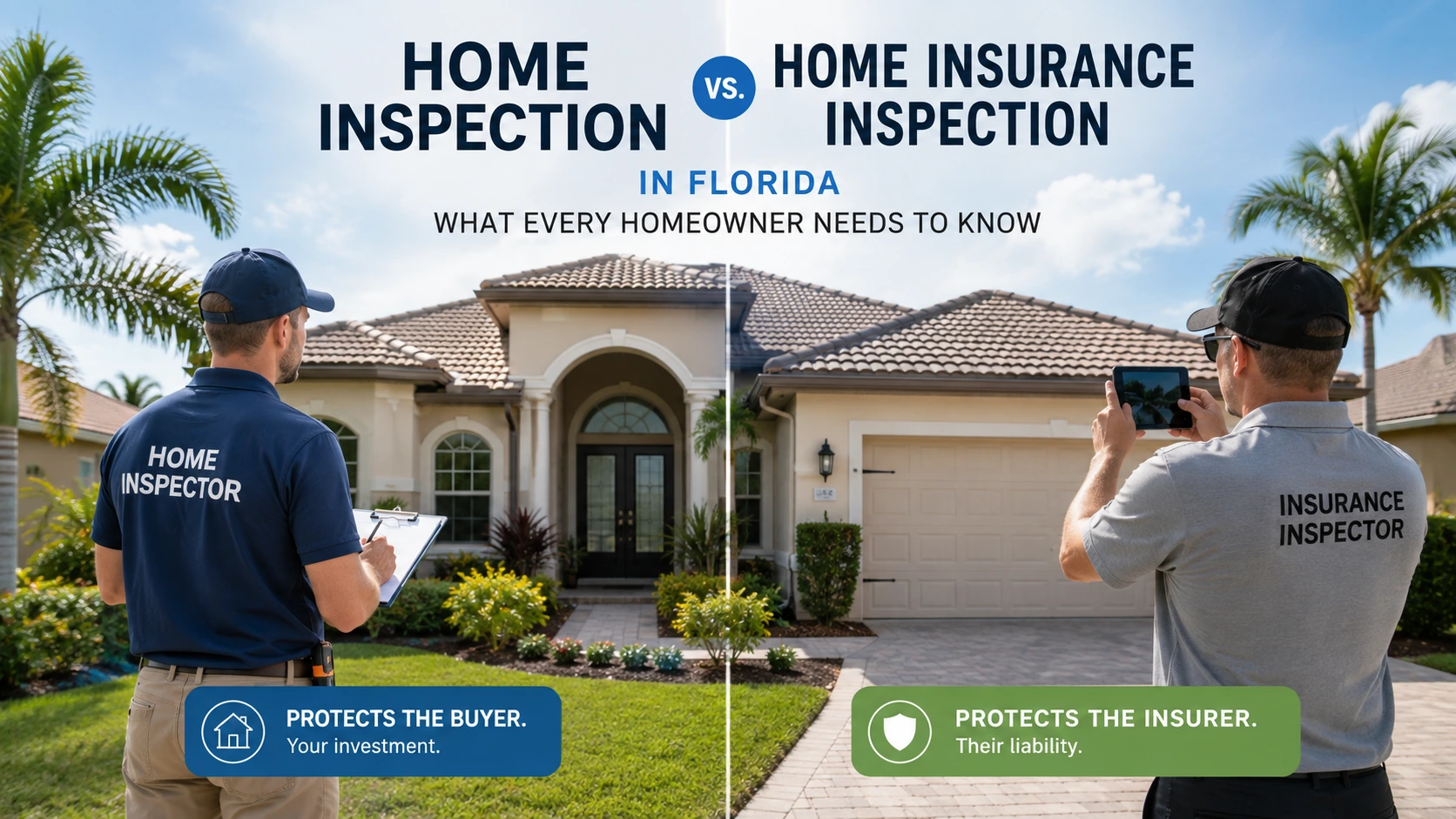
A home inspection is ordered and paid for by the buyer to understand the full condition of the property before closing. A home insurance inspection is ordered by the insurance company to evaluate whether the property meets its underwriting requirements. If you are buying a home in Florida, a full inspection helps protect your purchase decision. If your insurer sends an inspector, the findings may affect your coverage, renewal, or required repairs.
Home Inspection vs. Home Insurance Inspection
What Is a Home Inspection?
A home inspection is a comprehensive visual assessment of a property’s condition, performed by a licensed Florida home inspector. The buyer hires and pays for it. The inspector evaluates the property’s major systems and components, including the roof, structure, electrical system, plumbing, HVAC, attic, foundation, pool, and more.
The written report is produced for the buyer. It gives the buyer information they can use to understand the property, plan future repairs, ask questions, or negotiate before closing.
A full home inspection typically takes several hours because it covers much more than the items an insurance company may review. At Next Day Inspections, the written report is delivered the same day.
For a deeper comparison between a full inspection and an insurance-focused inspection, see our guide to 4-point inspection vs full home inspection.
What Is a Home Insurance Inspection?
A home insurance inspection is conducted by an inspector working for your insurance carrier, not by an inspector you hire for buyer due diligence. It is also not the same as a 4-point inspection, even though homeowners often confuse the two.
Insurance companies may inspect properties for several reasons:
Some insurance inspections focus only on the exterior. Others may require access to parts of the interior depending on the carrier’s underwriting process and what they need to verify.
Why Does My Insurance Company Send an Inspector?
Insurance carriers use inspections to identify conditions they consider higher risk before or after issuing a policy. In Florida, common areas of concern include aging roofs, older electrical systems, plumbing materials, exterior deterioration, and safety hazards.
If the insurance inspection identifies conditions that do not meet the carrier’s underwriting guidelines, the insurer may:
- Require repairs within a specified timeframe
- Change the policy terms or premium
- Issue a notice of non-renewal
- Take other action allowed under the policy and applicable Florida requirements
What Does an Insurance Inspector Look For?
Insurance inspectors are focused on risk exposure rather than the buyer’s overall understanding of the property. Their checklist may vary by carrier, but several exterior conditions are commonly reviewed.

What Happens After an Insurance Inspection?
If the inspection does not identify a condition that requires action, your policy may continue without any additional steps.
If the inspector flags an issue, the carrier may send you a letter identifying the condition and a deadline for correction. Depending on the request, you may be asked to provide photographs, contractor receipts, documentation, or a follow-up inspection showing the repair was completed.
Read every notice carefully and respond before the carrier’s deadline. If you do not understand what is being requested, contact your insurance agent or carrier for clarification.

Key Differences Between a Home Inspection and Insurance Inspection
The most important difference is whose interests the inspection serves.
A home inspection serves the buyer. The findings are intended to help the buyer understand the property, decide whether further evaluation is needed, plan for future repairs, and negotiate before closing.
A home insurance inspection serves the carrier. The insurer uses the findings to determine whether the property fits its underwriting requirements and what conditions, if any, must be addressed for coverage.
The scope is also very different. A full home inspector may spend hours evaluating the structure and major systems. An insurance inspector may conduct a much shorter inspection focused on specific risk factors.
This is also why the two inspections can reach different conclusions about the same property. One inspection is broad and buyer-focused. The other is limited by the insurer’s underwriting priorities.
Can the Reports Be Used Interchangeably?
No.
A buyer’s full home inspection report is not the same as an insurer’s inspection or a 4-point inspection. Each document has a different scope and purpose.
A home insurance inspection is also not a substitute for a buyer’s full inspection because it does not evaluate the property at the same level of detail.
A 4-point inspection sits between the two in scope. It is an insurance-focused report covering four systems: roof, electrical, plumbing, and HVAC. It is not a full home inspection and it is not the same as an insurance company’s own internal inspection.
Which Inspection Do You Need and When?
Buying a Home
Book a full home inspection. If your insurance company also requires a 4-point inspection, you can schedule the two at the same appointment. A full inspection gives you the broader property information you need before closing.
Getting or Renewing Insurance
If your carrier sends an inspector, cooperate with the process and respond promptly to any findings. If they require a 4-point inspection, schedule it with a qualified Florida inspector.
After a Major Storm
An independent home inspection can help document the property’s condition after a storm. Your insurer or adjuster may still perform a separate assessment for insurance purposes.
Selling Your Home
A pre-listing inspection can help identify issues before a buyer’s inspection. Addressing known defects early may reduce surprises during negotiations.
What If the Insurance Inspector Finds Issues?
Act quickly and follow the instructions in the carrier’s notice. If repairs are required:
- Get contractor estimates as soon as possible
- Schedule required repairs within the available timeframe
- Photograph conditions before and after the repair
- Send the requested documentation before the deadline
- Ask for confirmation that the requirement has been satisfied
If the finding involves a major system such as the roof and you cannot complete the work within the requested timeframe, contact your insurance agent or carrier immediately to discuss what options may be available.
How to Prepare for Each Inspection Type
Before a Home Inspection
Attend the inspection if possible. Ask the inspector to explain significant findings and areas that may require specialist evaluation.
Review the written report carefully when you receive it. If you are comparing the inspection with another part of the buying process, our home inspection vs appraisal guide explains how the roles differ.
Before a Home Insurance Inspection
Walk around the exterior before the inspection and address obvious deferred maintenance you can safely correct, such as loose debris, damaged gutters, or unsecured fencing.
If you are also evaluating wind-resistant construction features, a separate wind mitigation inspection may be relevant.
If you are unsure what the insurance inspector found, review the carrier’s report or notice carefully. If you disagree with a condition or need an independent opinion, a licensed home inspector can provide a separate assessment for your records.
Frequently Asked Questions
Is a home insurance inspection the same as a 4-point inspection?
No. A 4-point inspection is a specific insurance-focused inspection covering the roof, electrical system, plumbing, and HVAC. A home insurance inspection is conducted for the carrier and may use different criteria depending on the insurer’s underwriting guidelines.
Can my insurance company take action based on an inspection?
Yes. If an inspection identifies a condition that does not meet the carrier’s underwriting requirements, the insurer may request repairs, change policy terms, non-renew the policy, or take other action allowed under the policy and applicable Florida requirements.
Do I have to let the insurance inspector inside my home?
Some insurance inspections are exterior-only. Others may require interior access. If your carrier requests access as part of its underwriting process, review your policy requirements and contact the carrier or your insurance agent if you have questions.
Will my home inspection report help with insurance?
A buyer’s home inspection report is different from the documents an insurer may require for underwriting. If your insurance company requests a 4-point inspection or its own inspection, a general home inspection does not automatically replace that requirement.
How often do insurance companies inspect homes in Florida?
There is no single inspection schedule that applies to every carrier and property. An insurer may inspect at policy inception, renewal, or as part of an underwriting review.
What is one of the most important areas in a Florida insurance inspection?
The roof is a major underwriting concern because its age, condition, visible deterioration, and remaining useful life can affect how an insurer evaluates property risk.
Final Thoughts
A home inspection and a home insurance inspection may happen around the same property, but they serve different people and answer different questions.
If you are buying a home, the full inspection helps you understand what you are purchasing. If your insurance company sends an inspector, pay close attention to the findings because they may affect what the carrier requires for continued coverage.
When you are unsure about the condition of the property, an independent inspection gives you documentation and a clearer understanding of what is actually happening before you make your next decision.
Book Your Naples Home Inspection Today
Licensed Florida home inspectors. Same-day written reports. Transparent pricing. 340+ five-star Google reviews.
See current home inspection pricing or schedule your inspection online.
Book Your InspectionServing Naples · Fort Myers · Cape Coral · Bonita Springs · Marco Island · Lehigh Acres
Services: Full Home Inspection · 4-Point Inspection · Wind Mitigation
Florida home inspectors are regulated by the Florida Department of Business and Professional Regulation. This article is for general educational purposes and does not provide legal or insurance advice.