
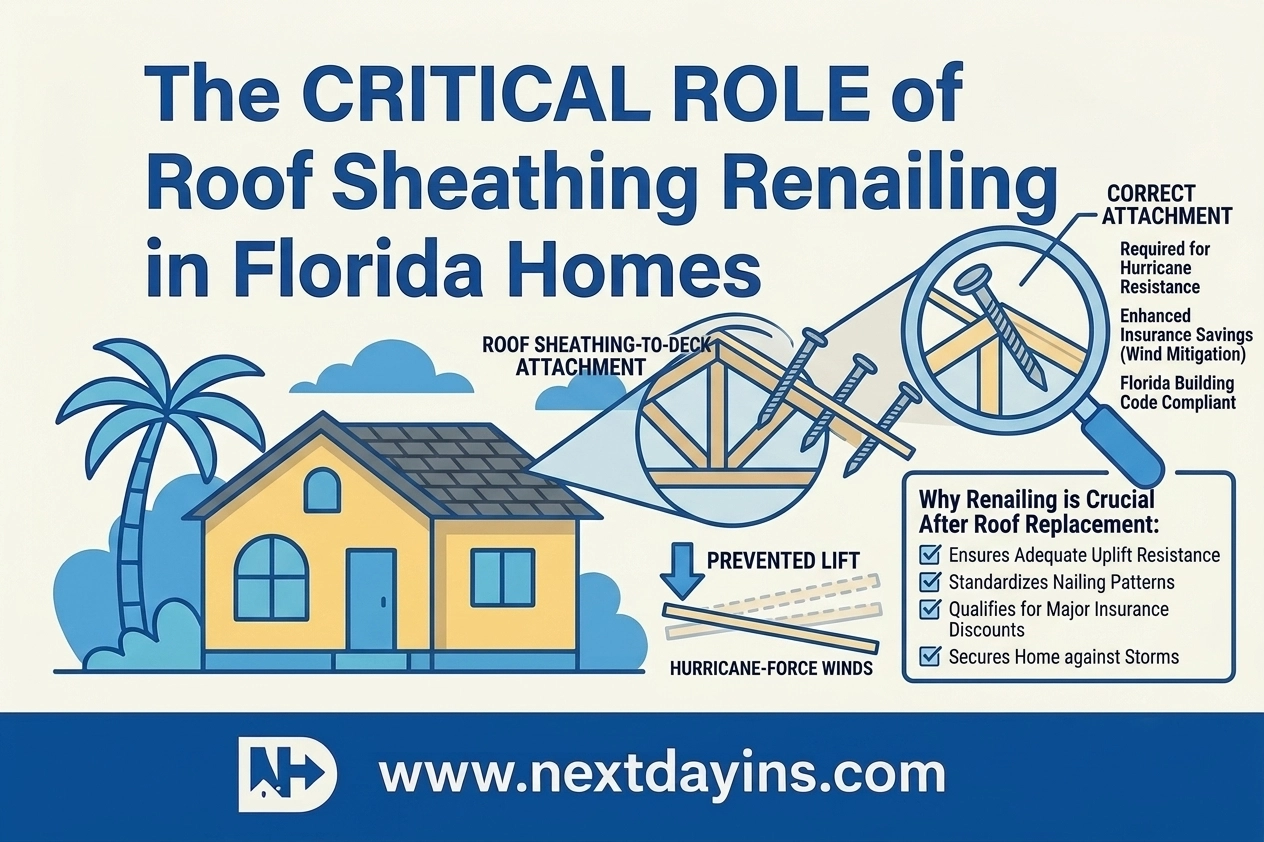
Importance of Renailing in Florida
Roof decking plays a critical role in the structural integrity and durability of a roof. When it comes to fastening roof decks, the debate between stapled and nailed installations often arises. Understanding the differences between stapled and nailed roof decks, as well as the importance of renailing a stapled roof in Florida, is essential for homeowners and roofing professionals. Below is a clear breakdown of strength factors and why renailing matters in the Sunshine State.
Stapled vs Nailed Roof Decks The Difference in Strength
Stapled Roof Decks
Staples are commonly used for fastening roof decks due to their speed and ease of installation. They provide a secure attachment but usually offer less holding power than nails, especially in high wind and hurricane-prone regions like Florida. Over time, staples may deteriorate or loosen, which can compromise the stability of the roof deck.
Nailed Roof Decks
Nails are traditional fasteners for roof decking and are known for their stronger holding power and resistance to uplift forces. Nailed roof decks perform better against wind uplift, impact, and external stress. Nails penetrate deeper into the decking material and framing, creating a stronger and more secure connection.
Renailing a Stapled Roof Why It Is Important in Florida
Wind Uplift Resistance
Florida is exposed to hurricanes and strong wind activity. Renailing a stapled roof with nails greatly improves the roof’s ability to resist high wind speeds and uplift forces, reducing the risk of roof failure during storms.
Building Code Compliance
Florida building codes often include specific requirements for roof deck attachment. Renailing a stapled roof using code-approved nails helps ensure compliance with safety regulations and strengthens overall structural reliability.
Long Term Durability
Renailing improves the long-term performance of the roof by reducing deck movement, preventing water intrusion, and limiting structural damage that can develop over time due to weak fasteners.
Insurance Requirements
Many insurance providers in Florida require stronger roof deck attachment methods. Renailing a stapled roof may help meet these requirements and can positively impact insurance approval and coverage terms.
Benefits of Renailing a Stapled Roof in Florida
Enhanced Wind Resistance
Nails provide stronger protection against wind uplift, lowering the risk of roof damage during hurricanes and severe weather.
Improved Structural Integrity
Renailing reinforces the connection between the roof deck and framing, strengthening the entire roofing system.
Maintenance and Safety
Routine inspection and renailing help maintain a secure roof system and reduce long-term safety risks and repair costs.
Compliance and Peace of Mind
Meeting building codes and insurance standards gives homeowners peace of mind knowing their roof is secure and compliant.
Final Thoughts
The strength and reliability of a roof deck depends greatly on the fastening method used. While stapled roof decks offer installation convenience, renailing them with nails is essential in Florida to improve wind resistance, comply with regulations, and ensure long-term durability. By prioritizing renailing, homeowners can better protect their property against severe weather and safeguard their investment for years to come.